
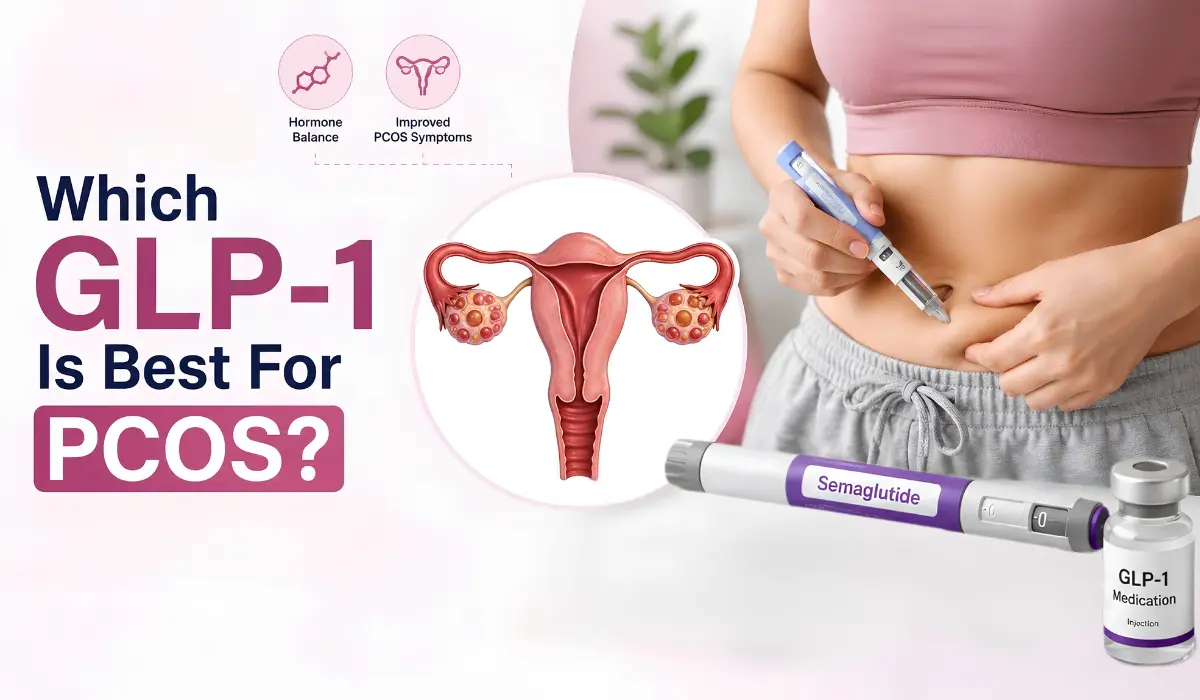


Living with Polycystic Ovary Syndrome can feel frustrating for many women, especially when symptoms like weight gain, irregular periods, acne, and insulin resistance become difficult to manage. Since it is harder to lose weight with PCOS, women are now exploring GLP-1 medications for extra support.
This article explains how GLP-1 medications work for PCOS, compares the best options available, and explores how they may support overall health.
What Is PCOS?
Polycystic Ovary Syndrome is a hormonal disorder that changes the normal function of the ovaries. Women with PCOS may experience irregular periods, acne, excessive facial hair, weight gain, and difficulty becoming pregnant.
Many women with PCOS also develop insulin resistance, where the body has trouble using insulin properly. This can make weight loss more difficult and increase the risk of type 2 diabetes over time. The symptoms and severity of the condition can be different for each person.
How GLP-1 medications may help women with PCOS?
GLP-1 medications may help women with PCOS because they target appetite, insulin resistance, and weight management at the same time. These medications slow digestion, reduce hunger, and help people feel fuller after eating.
Since insulin resistance is common in PCOS, improving blood sugar control may also help reduce some hormonal symptoms. Many women with PCOS struggle with constant cravings and difficulty losing weight, even with diet and exercise.
GLP-1 medications may support gradual and more consistent weight loss, which can improve overall health and hormone balance.
Best GLP-1 medications for PCOS compared
Different medications may work better for different people. Doctors usually choose treatment based on weight, insulin resistance, medical history, and treatment goals.
| Medication | Main ingredient | Common use | Possible PCOS benefits |
| Wegovy | Semaglutide | Weight loss | Storing appetite control and weight loss |
| Ozempic | Semaglutide | Type-2 diabetes | Improve insulin resistance and weight |
| Mounjaro | Tirzepatide | Type-2 diabetes | May support larger weight loss |
| Zepbound | Tirzepatide | Weight loss | Helps appetite and metabolic health |
| Saxenda | Liraglutide | Weight loss | Daily option for appetite control |
Semaglutide For PCOS
Semaglutide is the main active ingredient found in Ozempic and Wegovy. It is one of the most commonly discussed GLP-1 medications for PCOS because of its strong effects on appetite and weight loss. Many women using semaglutide report reduced cravings, smaller portion sizes, and gradual weight reduction over time.
Weight loss from semaglutide may also improve insulin resistance, which is an important issue in PCOS. Better insulin control can sometimes help regulate the menstrual cycle and improve overall metabolic health. Since semaglutide is usually taken once weekly, many people also find it convenient.
Tirzepatide For PCOS
Tirzepatide comes as the active ingredient in Zepbound and Mounjaro. This medication works on two hormone pathways instead of one, which may lead to stronger weight loss effects for some people.Women with PCOS who struggle with obesity or severe insulin resistance may benefit from tirzepatide’s effect on appetite and blood sugar control.
Some studies and patient experiences suggest that tirzepatide may lead to larger weight loss compared to older GLP-1 medications.However, it may also cause stomach-related side effects during the adjustment period.
Liraglutide for PCOS
Liraglutide is the active ingredient in Saxenda. Unlike semaglutide and tirzepatide, liraglutide is taken as a daily injection instead of weekly. It may still help women with PCOS lose weight and reduce appetite, especially when combined with healthy eating and exercise.
Some doctors have used liraglutide for PCOS for several years because it may improve insulin resistance and support gradual weight loss. While newer medications may produce stronger results for some people, liraglutide remains an option for women who cannot tolerate other treatments.
GLP-1 vs metformin for PCOS
Metformin has long been used to help manage insulin resistance in women with PCOS. It may improve blood sugar levels, menstrual cycles, and ovulation in some individuals. However, weight loss with medium metformin is often modest.
GLP-1 medications may provide stronger appetite control and greater weight loss compared to metformin alone. Some doctors may even prescribe both treatments together for women with significant insulin resistance due to obesity. The best option depends on individual symptoms, health history, and treatment goals.
Can GLP-1 drugs improve fertility in PCOS?
Weight loss and improved insulin resistance may indirectly improve fertility in some women with PCOS. When hormone balance improves, ovulation and the menstrual cycle may become more regular. Some women who lose weight with GLP-1 medications may find it easier to conceive naturally.
Even so, GLP-1 medications are not fertility treatments. Women trying to conceive should always discuss medication use with their doctor because some GLP-1 medications are not recommended during pregnancy.
Side effects of GLP-1 medications in women with PCOS
Like any medication, GLP-1 drugs may cause side effects. The most common side effects include nausea, bloating, constipation, vomiting, diarrhea, and stomach discomfort. These effects are often stronger during the first few weeks of treatment or after dose increases.
Some women may also experience tiredness or dehydration if they are not eating or drinking enough. Doctors usually increase the dosage slowly to help reduce side effects. Most side effects improve as the body adjusts to treatment.
Who may be a good candidate for GLP-1 therapy in PCOS?
Women with PCOS who struggle with obesity, insulin resistance, emotional eating, or difficulty losing weight may be good candidates for GLP-1 treatment. These medications may also help women at risk of type -2 diabetes or metabolic syndrome.
However, GLP-1 medications may not be necessary for everyone with PCOS. Doctors review medical history, current medications, pregnancy plans, and overall health before recommending treatment. Lifestyle changes such as healthy eating and regular exercise are still important even while using medication.
Conclusion
GLP-1 medications may offer helpful support for women with PCOS, especially for weight management and insulin resistance. Semaglutide, tirzepatide, and liraglutide each have different strengths, and the best one depends on individual health needs and goals.
While these medications are not a cure for PCOS, they may improve appetite control, metabolic health, and overall quality of health. Women considering GLP-1 treatment should speak with their doctor to choose the safest and most effective option.
Frequently asked questions
Which GLP-1 medication is best for PCOS?
Semaglutide and tirzepatide are commonly discussed because of their strong weight loss effects.
Is metformin or GLP-1 better for PCOS?
GLP-1 medications may lead to greater weight loss, while metformin mainly targets insulin resistance.
Can GLP-1 medications improve fertility?
Weight loss and improved hormone balance may help support fertility in some women.
What are the most common GLP-1 side effects?
Nausea, bloating, constipation, and stomach discomfort are commonly reported side effects.
Are GLP-1s safe for long-term use?
Many GLP-1medications are safe for long-term use under medical supervision.