
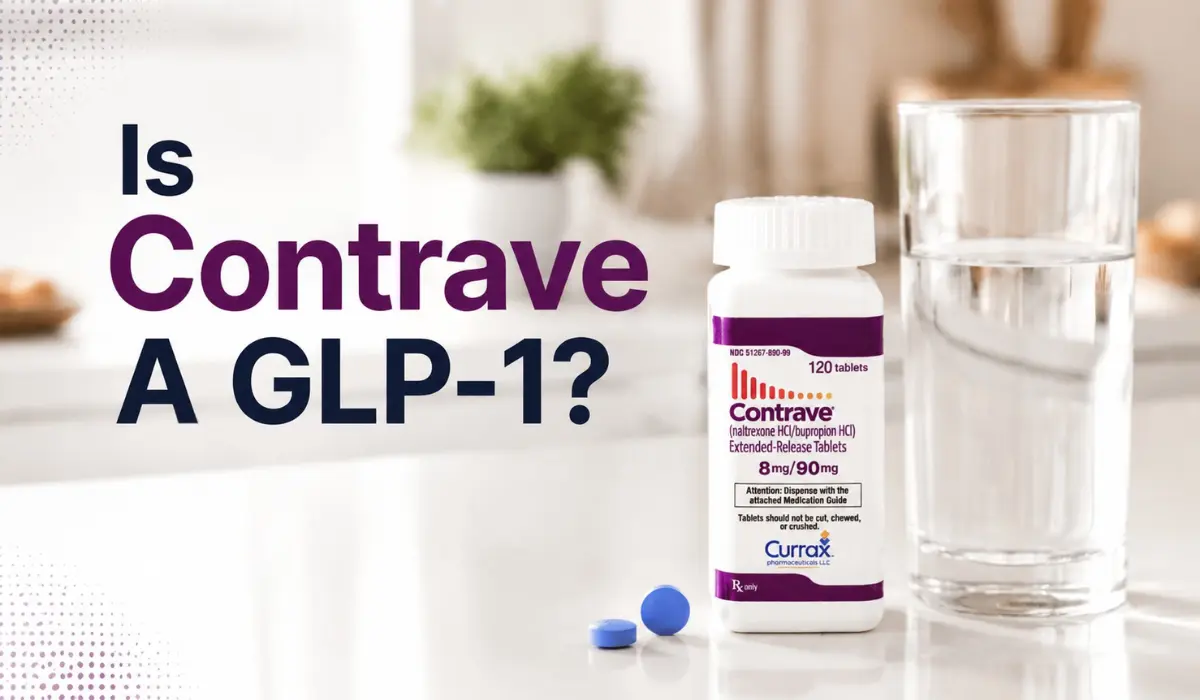


Weight loss and medications have become more popular in recent years, especially with the rise of GLP-1 drugs. Because many medications are now used for weight management, people often wonder whether Contrave is also a GLP-1 medication.
This article will help you know what Contrave is, how it compares to GLP-1 medications, which treatment may work better, and other necessary information.
What Is Contrave?
Contrave is a prescription medicine used to help adults lose weight. It combines two medicines called bupropion and naltrexone. Contrave works mainly by affecting areas of the brain linked to appetite, cravings, and reward eating.
It is usually prescribed along with healthy habits. Unlike GLp-1 drugs, Contrave is taken as an oral tablet instead of an injection.
What Are GLP-1 Medications?
GLP-1 medications are drugs that copy the action of a natural hormone called glucagon-like-peptide-1. These medications help control appetite, slow digestion, and improve blood sugar levels.
Some of the popular GLP-1 medications include Wegovy, Ozempic, Zepbound, and Mounjaro. Many GLP-1 drugs are used for both type-2 diabetes and long-term weight management.
How Contrave Helps With Weight Loss?
Contrave works by targeting hunger signals and food cravings in the brain. Bupropion may help reduce appetite and improve energy levels, while naltrexone affects the reward system connected to emotional eating and cravings. Together, these medications may help people eat less and better control unhealthy eating habits.
Unlike GLP-1 medications, Contrave does not slow stomach emptying or directly affect insulin levels. Some people may find Contrave especially helpful if emotional eating or cravings are major challenges during weight loss.
How Do GLP-1 Medications Work?
GLP-1 medications work differently from Contrave. They help people feel full longer by slowing digestion and reducing hunger signals. They also improve insulin release when blood sugar rises, making them useful for people with type-2 diabetes or insulin resistance.
Because these medicines affect appetite hormones and digestion together, many people naturally reduce calorie intake without constantly feeling hungry. GLP-1 medications are usually given as weekly or daily injections, depending on the specific medications.
Contrave vs GLP-1: what’s the difference? Table and explanation
| Feature | Contrave | GLP-1 medications |
| Type of medication | Oral weight loss pill. | Injectable hormone-based medication. |
| Main action | Controls cravings and appetite. | Slows digestion and reduces hunger. |
| Blood sugar benefits | Limited. | Strong blood sugar support |
| Weight loss speed | Moderate. | Often stronger weight loss. |
| Common side effects | Headache, nausea, and insomnia. | Nausea, bloating, vomiting. |
| Long-term use | possible | Commonly used long-term |
The biggest difference is that Contrave mainly affects the brain’s appetite and reward system, while GLP-1 medication works through hormones, digestion, and blood sugar control. Both may help with weight loss, but they suit different medical needs and lifestyles.
Which is more effective for weight loss?
Research suggests that GLP-1 medications often produce greater average weight loss compared to Contrave. Medications like Wegovy and Zeppond have shown significant weight loss results in many patients. However, effectiveness can vary from person to person.
Some people may respond very well to Contrave, especially if cravings and emotional eating are major issues. Others may benefit more from GLP-1medications if they struggle with obesity, insulin resistance, and type-2 diabetes. Lifestyle changes, such as healthy eating and daily exercise, can remain important with both treatments.
Side effects of Contrave vs GLP-1 medications
Both treatments can cause side effects. Common Contrave side effects include nausea, headache, dry mouth, constipation, dizziness, and trouble sleeping. Since bupropion affects brain chemicals, mood changes may also happen in some individuals.
Common side effects of GLP-1 medications include nausea, vomiting, bloating, and stomach pain, especially in the early weeks of treatment. These symptoms usually get better over time as the body adapts to the medication. Doctors usually review medical history carefully before recommending either treatment to reduce safety risks.
Can Contrave and GLP-1 medications be taken together?
In some cases, doctors may prescribe Contrave together with GLP-1 medications. Combining treatments may help certain patients who need additional appetite control or weight loss support. However, this should only happen under medical supervision because combining medications may increase the risk of side effects.
Doctors consider factors like current health conditions, medications, blood pressure, mental health history, and weight loss goals before using combination therapy.
Who may be a better candidate for Contrave?
Contrave may be a good option for people who prefer oral medication instead of injections.It may also help people who struggle with emotional eating, food cravings, or stress-related eating habits.
Some people choose Contrave because it is sometimes more affordable than newer GLP-1 medications. However, Contrave may not be suitable for people with seizure disorders, uncontrolled blood pressure, or certain mental health conditions.
Who may benefit more from GLP-1 medications?
GLP-1 medications may work better for people with obesity, insulin resistance, type-2 diabetes, or severe appetite problems. These medications also provide greater long-term weight loss for some individuals. People who need both blood sugar control and weight management often benefit more from GLP-1 treatments.
Risks and safety considerations for both treatments
Both Contrave and GLP-1 medications should only be used with medical supervision. Contrave may increase blood pressure or affect mood in some people. GLP-1 may cause dehydration or stomach-related side effects if not managed properly.
Neither treatment is safe for everyone. Pregnancy, certain medical conditions, medication interactions, and personal health history can affect which option is safest. Doctors carefully review these factors before prescribing treatment.
Conclusion
In short, Contrave is not a GLP-1 medication, even though both are used for weight loss. Contrave mainly targets cravings and appetite signals in the brain, while GLP-1 medications work through hormones, digestion, and blood sugar control.
Each option has different benefits, risks, and treatment styles. The best choice depends on a person’s health condition, medical history, and weight loss goals. Speaking with a healthcare provider can help determine which treatment may be the safest and most effective option.
Frequently asked questions
Is Contrave a GLP-1 medicine?
No, Contrave is an oral non-injectable medication and is not a GLP-1 medication.
Does Contrave work like Ozempic?
No, Contrave and Ozempic work differently inside the body.
Which helps more with cravings?
Contrave may help more with emotional eating and cravings.
Can Contrave and GLP-1 be used together?
Some doctors may prescribe both together under supervision.
Is Contrave taken as an injection?
No, Conmtrave is taken as an oral tablet.