
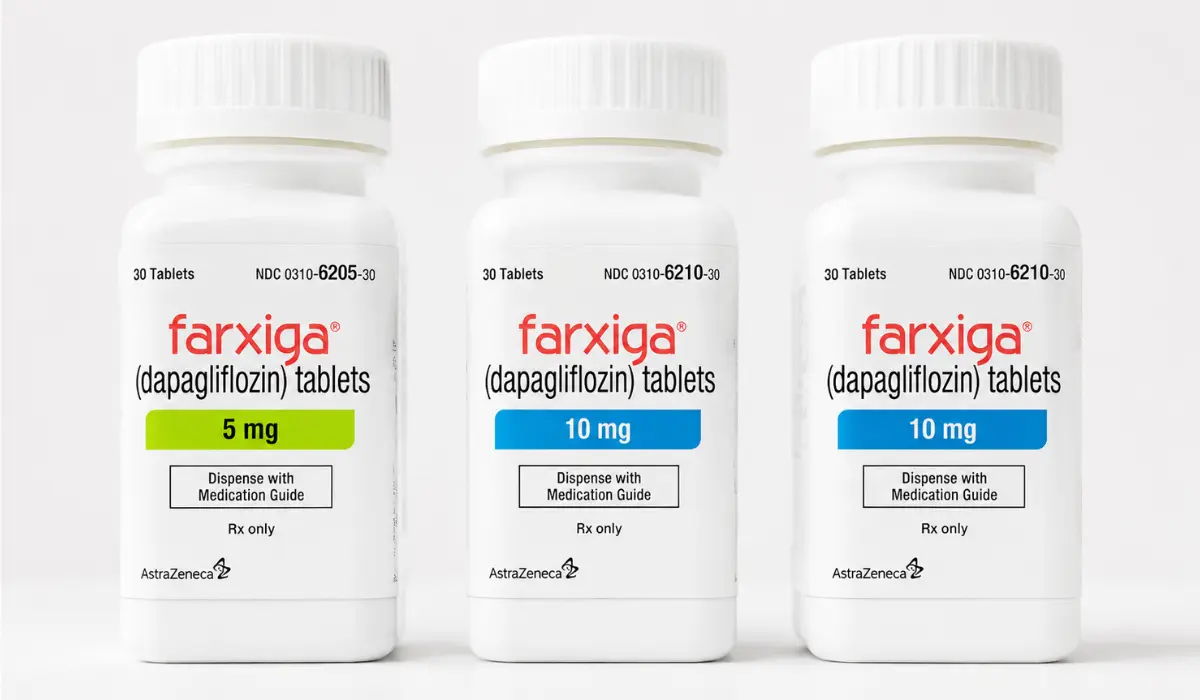


Confused about whether Farxiga is a GLP-1 medication? This article has you covered. Keep on reading till the end to know everything about Fraxiga medications and how they differ from GLP-1 medications. In addition, you also find out how both these medications work, for what causes, and who they are suitable for.
What Is Farxiga?
Farxiga is the brand name for dapagliflozin, a prescription medication mainly used to treat type 2 diabetes. It is also approved to help lower the risk of hospitalisation from heart failure and slow the progression of chronic kidney disease in some patients.
Farxiga belongs to a drug class called SGLT2 inhibitors. These medications work through the kidneys by helping the body remove extra sugar through urine. Unlike insulin or GLP-1 medications, Farxiga does not directly increase insulin levels. Instead, it lowers blood sugar by helping the body get rid of excess glucose naturally.
Is Farxiga A GLP-1 Medication?
No, Farxiga is not a GLP-1 receptor agonist. GLP-1 medications include drugs like Ozempic, Wegovy, Mounjaro, Trulicity, and Victoza. These medications mimic a natural hormone in the body called glucagon-like-peptide-1. This hormone helps control blood sugar, slow digestion, and reduce appetite.
Farxiga works differently. It blocks a protein called SGLT2 in the kidneys. This causes the body to remove excess glucose through urine instead of keeping it in the bloodstream. So, while both types of medications can improve blood sugar control, they belong to completely different drug classes.
How does Farxiga work for Diabetes?
Farxiga works through the kidneys by helping the body remove extra sugar through urine. This lowers blood sugar levels without heavily increasing insulin activity.
Some people may also notice mild weight loss and small blood pressure improvements. Farxiga can also work alongside other diabetes medications for added blood sugar support.
How GLP-1 Medications Work?
GLP-1 medications work in several ways at the same time. They help the pancreas release insulin when blood sugar rises and slow stomach emptying. It also reduces hunger and cravings, thereby helping you feel fuller.
This is why medications like Ozempic and Wegovy are often used for both diabetes and weight loss. Many GLP-1 drugs are injected weekly, though some oral versions are also available.
SGLT2 inhibitors VS GLP-1 Medications
Although both drugs help manage type 2 diabetes, they have different strengths.
| Feature | Farxiga (SGLT2) | GLP-1 medications |
| Main action | Removes sugar through urine | Controls appetite and insulin |
| Taken as | Oral tablet | Mostly injections |
| Weight loss | mild to moderate | Moderate to significant |
| Heart benefits | yes | yes |
| Kidney benefits | Strong evidence | Some benefits |
| Common side effects | Urinary infections, dehydration. | Nausea, vomiting. |
| Appetite reduction | minimal | strong |
Doctors sometimes prescribe both together because they can complement each other.
Can Farxiga Help With Weight Loss?
Yes. but modestly.
Since Fraxiga removes excess sugar from the body, it also removes calories. This can lead to mild weight loss over time. However, the amount is typically smaller compared to GLP-1 medications like Wegovy or Ozempic.
People using FLp-1 drugs often lose more weight because these medications reduce hunger and calorie intake significantly. Farxiga may still be useful for people who prefer daily pills instead of injections, need kidney or heart protection, and those who cannot tolerate GLP-1 side effects.
Heart and Kidney Benefits of Farxiga
One major advantage of Farxiga is its proven benefits for the heart and kidneys. Research shows that Farxiga can reduce hospitalisation for heart failure, slow kidney disease progression, and lower the risk of worsening kidney function in some patients.
Because of these benefits, doctors sometimes prescribe Farxiga even for people without diabetes who have heart failure or chronic kidney disease. GLP-1 medications also support heart health, but Farxiga is especially known for kidney protection.
Side Effects of Farxiga vs GLP-1 Medications
Every medication has possible side effects. Commonly reported side effects of Fraxioga include the following:
- Frequent urination. ]
- Dizziness.
- Urinary tract infections.
- Yeats infections.
- Dehydatrion.
Common GLP-1 side effects:
- Nausea.
- Vomiting.
- Diarrhea.
- Constipation.
- Stomach discomfort.
In rare cases, both drugs may cause serious complications; this is why medical supervision is important.
Can you take Farxiga and GLP-1 Medications Together?
Yes, in some cases, doctors prescribe both together. Using Farxiga with GLP-1 medication may improve blood sugar control, support greater weight loss, and provide heart and kidney protection.
However, combining medications can increase the risk of dehydration, low blood sugar, or digestive problems in some people. Your doctor will decide whether the combination is appropriate for you.
Who May Be a Better Candidate for Farxiga and GLP-1 Medications?
Garxiga may be a better option for people who:
- I have type 2 diabetes with kidney disease.
- Have heart failure.
- Prefer oral medication.
- Cannot tolerate the GLP-1 digestive side effects.
GLP-1 medications may be more suitable for people who:
- I need significant weight loss.
- Struggle with appetite control.
- Need stronger blood sugar reduction.
Treatment decisions depend on overall health, goals, medical history, and insurance coverage.
When to Talk to Your Doctor About Diabetes or Weight Loss Medications?
Speak with your doctor in the following cases:
- Have uncontrolled blood sugar.
- Want help with weight loss.
- Have kidney or heart disease.
- Experience side effects from diabetes medications.
- You are unsure which medication is right for you.
Never stop or change medications without medical advice.
Conclusion
In short, Farxiga is not a GLP-1 medication. It belongs to a different drug class called SGLT2 inhibitors and lowers blood sugar by helping the kidneys remove excess sugar from the body through urine. While both Farxiga and GLP-1 drugs help manage type-2 diabetes and support weight loss, they work differently in the body.
Farxiga stands out for heart and kidney protection, while GLP-1 drugs are often stronger for appetite control and weight reduction. The best medication depends on your personal health needs, treatment goals, and your doctor’s recommendations.
Frequently asked questions
What organ is Farxiga hard on?
Afrxiga primarily affects the kidneys and helps remove excess sugar from the body.
Is Farxiga better than Ozempic?
Farxiga helps manage blood sugar by improving kidney function, and Ozempic is a GLP-1 medication that supports effective weight loss in the body. Both work differently and may suit different people as per their needs.
Can I use Farxiga and Ozempic together?
Yes, in some cases, they are both used together as they work for different causes and complement each other.
Which is better for kidney protection?
Fraxiga has strong evidence supporting kidney function and protection.
Is Farxiga purely a weight loss drug?
Farxiga is not approved specifically for weight loss. But some people may lose a small amount of weight while using it.
References
- WebMD: Farxiga (Dapagliflozin) Overview
Explains how Farxiga works, its uses for type 2 diabetes, heart failure, kidney disease, and common side effects.
https://www.webmd.com/diabetes/farxiga-diabetes - Cleveland Clinic: Dapagliflozin Tablets
Provides information about dapagliflozin, including benefits, precautions, side effects, and patient guidance.
https://my.clevelandclinic.org/health/drugs/19382-dapagliflozin-tablets - Mayo Clinic: Dapagliflozin (Oral Route)
Reviews dapagliflozin uses, dosing, warnings, side effects, and how the medication helps manage diabetes.
https://www.mayoclinic.org/drugs-supplements/dapagliflozin-oral-route/description/drg-20095101 - Cleveland Clinic: GLP-1 Agonists
Explains what GLP-1 receptor agonists are, how they work, their benefits, risks, and examples of commonly prescribed medications.
https://my.clevelandclinic.org/health/treatments/13901-glp-1-agonists