
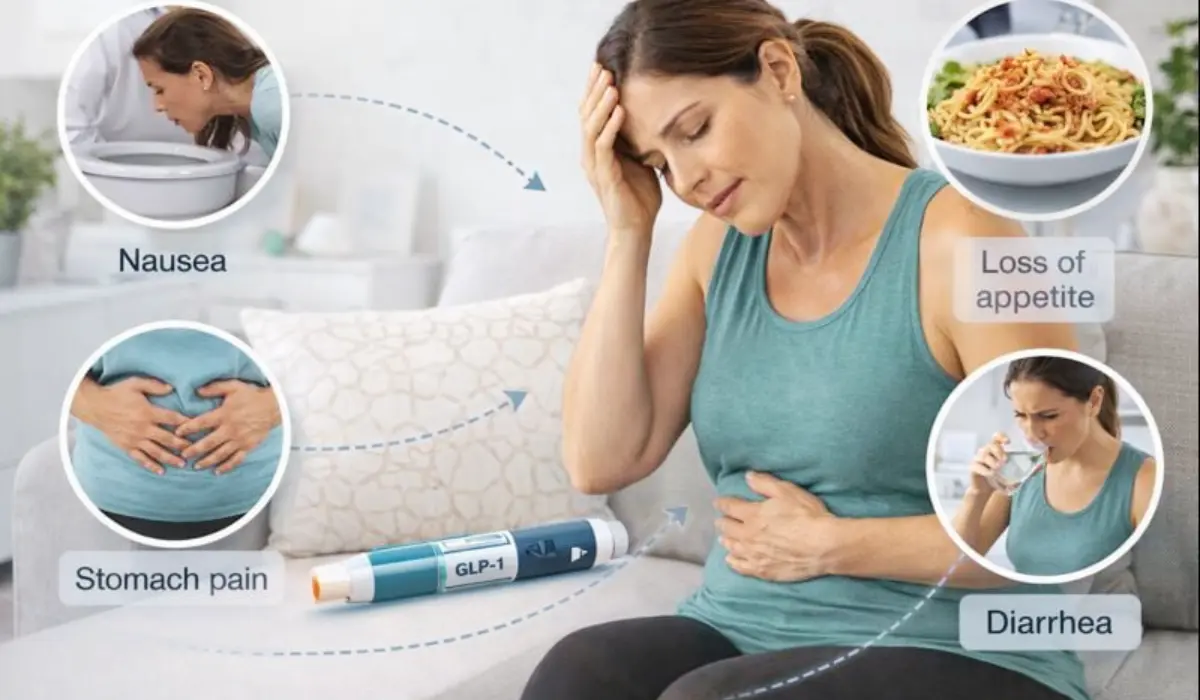


GLP-1 medications are widely used for weight loss and type 2 diabetes, but digestive side effects are common during treatment. One of the most reported problems is diarrhea. In most cases, the symptoms improve as the body adjusts to the medication.
In this article, we will explain why GLP-1 medications may cause diarrhea, how long it may last, and ways to manage digestive discomfort safely.
What Are GLP-1 Medications?
GLP-1 medications are prescription drugs that help control appetite and blood sugar levels. They copy the action of the natural hormone glucagon-like-peptide-1 and regulate hunger and digestion. These medications are commonly used for type-2 diabetes and obesity treatment.
Can GLP-1 Medications Cause Diarrhea?
Yes, diarrhea is a known side effect of many GLP-1 medications. Some people may experience loose stools, urgent bowel movements, or stomach discomfort after starting treatment or increasing the dosage.
Diarrhea is usually mild to moderate and often improves over time as the digestive system adjusts to medication. Not everyone experiences this side effect, and the severity can vary greatly between individuals.
Why GLP-1 Drugs May Affect Digestion?
GLP-1 medications are capable of changing the way the digestive system works. The slow stomach emptying can affect movement inside the intestines. These changes help people feel fuller, but they can also disturb normal digestion in some individuals.
The body may need time to adjust to these digestive changes. During this adjustment period, symptoms such as diarrhea, nausea, bloating, and stomach cramps may occur.
Which GLP-1 Medications are most likely to cause diarrhea?
Many GLP-1 medications, such as Ozempic, Wegovy, Zepbound, and Saxenda, have been linked to digestive side effects. Some people may notice stronger symptoms with higher doses or after dose increases.
Medications containing semaglutide and tirzepatide are commonly linked to stomach-related side effects because they strongly affect appetite and digestion. However, reactions vary from person to person.
When does diarrhea usually start after beginning GLP-1 treatment?
Diarrhea often begins during the first few days or weeks after starting GLP-1 medication. Symptoms may also appear after increasing the dosage because the digestive system must adjust again. For many people, the body slowly adapts over time, and symptoms become less frequent or disappear completely after several weeks.
How long does GLP-1-related diarrhea last?
The duration can vary depending on the person and medication dosage. Mild diarrhea may last only a few days. While some people experience symptoms for several weeks during the dose adjustments. Persistent diarrhea that continues for a long time should not be ignored because it may increase the risk of dehydration or nutritional problems.
What can make diarrhea worse while taking GLP-1 drugs?
Certain foods and habits may worsen digestive symptoms while taking GLP-1 medications. Eating greasy, fried, spicy, or very sugary foods may irritate the stomach further. Large meals may also increase discomfort because GLP-1 medications slow digestion. Not drinking enough water can make symptoms harder to manage. Alcohol and caffeine may also irritate the digestive system in some individuals.
How to manage diarrhea while on GLP-1 medications?
Eating smaller meals more slowly may help reduce stomach irritation. Choosing bland foods such as rice, toast, bananas, or soup may feel easier on the digestive system during flare-ups. Staying hydrated is extremely important.
Drinking water and electrolyte-containing fluids may help replace lost fluids. Some people also benefit from temporarily avoiding heavy or oily meals until symptoms improve.
Foods to avoid if GLP-1 medications are causing diarrhea
People experiencing diarrhoea on GLP-1 medications may want to avoid fried foods, fast food, spicy meals, sugary snacks, and high-fat dishes. Dairy products may also worsen symptoms in some individuals. Large portions and overeating may increase digestive discomfort because food stays in the stomach longer while taking GLP-1 medications.
Can dehydration become a concern with GLP-1-related diarrhea?
Yes, dehydration can become a serious concern if diarrhea is frequent or severe. Losing too much fluid may cause weakness, dizziness, headaches, dry mouth, and low blood pressure. People who also experience vomiting may become dehydrated more quickly. Drinking enough fluids and replacing electrolytes can help reduce this risk.
When is diarrhea a sign of a more serious problem?
Mild diarrhea is common. But severe symptoms may sometimes signal a more serious issue. Bloody stools, severe stomach pain, high fever, fainting, or inability to keep fluids down should not be ignored. Severe dehydration or ongoing digestive problems may require medical attention. People with existing digestive conditions should be especially careful.
Other digestive side effects linked to GLP-1 medications
Besides diarrhea, GLP-1 medications may also cause nausea, vomiting, constipation, bloating, stomach pain, gas, or reduced appetite. These symptoms often happen together because the medication changes digestion and stomach emptying.
Conclusion
GLp-1 medications can cause diarrhea because they affect digestion and stomach emptying. For many people, the symptoms are mild and temporary, especially during the first weeks of treatment or after dose increases.
Eating smaller meals, avoiding trigger foods, and staying hydrated may help improve symptoms. While occasional digestive discomfort is common, severe or long-lasting diarrhea should always be discussed with a doctor to avoid dehydration and other complications.
Frequently asked questions
Can diarrhea from GLP-1 medications cause dehydration?
Yes, severe diarrhea leads to dehydration if fluids are not replaced.
What foods should I avoid during diarrhea?
Greasy, spicy, sugary, and high-fat foods may worsen symptoms.
Which GLP-1 medications commonly cause diarrhea?
Ozempic, Wegovy, Mounjaro, and Zepbound may cause digestive side effects.
How long does GLP-1 diarrhea last?
It may last from a few days to several weeks, depending on the person.
When should I call my doctor?
You should contact your doctor if symptoms become severe or long-lasting.