
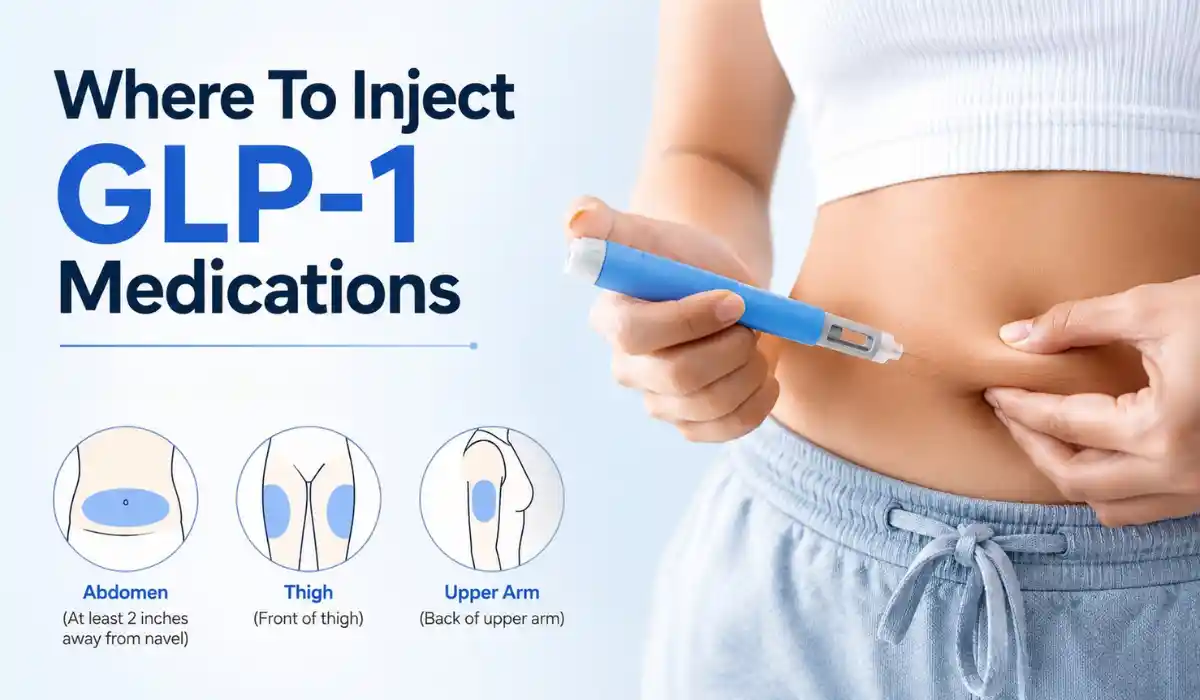


GLP-1 medications are commonly given as injections, but many people are unsure where these injections should be administered. This article explains the most common injection sites, how to use them safely, tips to reduce pain, and important things to avoid during the injection process. Understanding proper injection techniques may help improve comfort and treatment effectiveness.
What Are GLP-1 Injections?
GLP-1 injections are medications used to help manage type 2 diabetes and support weight loss in some individuals. These injections work by copying the action of a natural hormone that helps regulate appetite, insulin release, and blood sugar levels. They may also slow digestion, helping people feel full for a longer time after eating.
Many GLP-1 medications are taken weekly using an injection pen designed for simple self-administration at home. Common examples include Wegovy, Ozempic, and Mounjaro. These are prescribed under medical supervision for ongoing treatment and metabolic support.
Best Injection Sites for GLP-1 Medications
GLP-1 medications are usually injected into areas with enough fatty tissue under the skin. The abdomen is one of the most common injection sites because it is easy to access and often comfortable for self-injection. Make sure that you are injecting at least 2 inches away from the belly button.
Many people also use the upper thigh, especially in the front or outer area, as it provides another convenient option. The upper arm can also be used, typically in the back of the arm, where there is more fatty tissue. Following proper injection instructions can help improve comfort and support effective medication use.
How to Inject GLP-1 Properly?
Choose a clean area on the stomach, thigh, or upper arm before using the injection. Wash your hands and clean your skin gently. Place the injection pen flat against the skin and press the buttons as instructed. Hold it in place for a few seconds so the full dose enters properly.
Avoid rubbing the area immediately after the injection. Using a different spot each time may help prevent soreness, swelling, or skin irritation.
Stomach vs Thigh vs Arm: Which Injection Site Is Best?
There is no best injection site for everyone, as comfort and convenience can vary from person to person. Many people prefer the stomach because it is easy to reach and commonly causes less discomfort. The thigh may feel more comfortable for self-injections, especially for beginners.
The upper arm is another option, although some people may need assistance reaching the area properly. Rotating between sites can help reduce irritation and keep the skin healthier during long-term GLP-1 treatment.
Do You Need To Rotate Injection Sites?
Yes, rotating injection sites is generally recommended when using GLP-1 medications regularly. Repeatedly injecting into the same spot may lead to skin irritation, tenderness, swelling, or small lumps under the skin over time. Changing the location slightly with each injection can help keep the skin healthier and make injections more comfortable.
Many people rotate between the stomach, thighs, and upper arms or switch different areas within the same body part. Simple rotation habits may help improve the overall injection experience during long-term treatment.
Common Injection Mistakes To Avoid
Some common GLP-1 injection mistakes can make the process more uncomfortable or affect proper medication delivery. Injecting into bruised, hard, or irritated skin should be avoided, as it may increase pain or irritation. Using the exact same spot every time can also cause skin problems over time.
Some people remove the injection pen too quickly before the full dose is delivered. Skipping hand cleaning or not checking the medication properly before use may also create unnecessary issues. Following instructions carefully can help make injections smoother and safer.
Does Injection Site Affect Side Effects or Results?
In most cases, GLP-1 medication works the same no matter where you inject. However, some people may notice small differences in comfort or skin reactions depending on the area. One site may feel less sore or sensitive than the other.
Mild redness, itching, or swelling can sometimes happen around the injection spot, especially if the same area is used too often. Choosing a comfortable site and rotating injections regularly may help reduce irritation and make the treatment process easier over time.
Tips To Make GLP-1 Injections Less Painful
GLP-1 injections are usually quick and simple, but some people may still experience mild discomfort during or after the injection. A few small changes in routine may help make the process easier and more comfortable.
- Warm the injection pen slightly, if refrigerated.
- Choose a relaxed area with enough fatty tissue.
- Avoid bruised or irritated skin.
- Do not press the pen too firmly against the skin.
- Rotate skin spots regularly.
- Stay calm and inject slowly without rushing.
Conclusion
Choosing the right injection site and using proper technique can make GLP-1 treatment more comfortable and easier to manage. Common areas such as the stomach, thighs, and upper arm are all suitable options when used correctly.
Rotating injection sites, following instructions carefully, and avoiding common mistakes may help reduce irritation and improve the overall experience. While GLP-1 injections may seem difficult at first, many people become comfortable with the process over time through regular practice and proper guidance.
Frequently Asked Questions
Can I inject FLP-1 medications by myself?
Yes, many GLP-1 injection pens are designed for simple self-use at home after proper instructions from healthcare providers.
Does the injection hurt?
Most people feel only mild discomfort, and the injection is usually quick.
Can I inject it into the same spot every week?
Using the exact same spot repeatedly is not recommended because it may irritate the skin.
Do I need to change my injection sites?
Yes, rotating sites may help reduce skin irritation and soreness.
Where can GLP-1 medications be injected?
They are commonly injected into the stomach, thighs, or upper arm.